C3PT is not a list. It has a shape. At the center is Culture: the nucleus, the thing every organization actually runs on, the thing you are really building whether you name it or not. Communication and Collaboration are how you build that culture. Perseverance and Trust are how you sustain it when the pressure comes. Build it, then sustain it. That is the whole model.
Master C3PT and you can lead anywhere.
ON THE METHODOLOGY“Your methodology aligns exactly with what high‑caliber professionals require during transition. The organizational intelligence, the Qualifications Crosswalk, and the disciplined, thoughtful preparation delivered a level of confidence I did not anticipate. If you are entering this next phase, call Kelvin before your next interview.”
Brigadier General Alfred Flowers Jr., USAFSenior Military Executive · C3PT Inaugural Client
Culture sits at the center because it is what every organization actually runs on. The other four are how it is built and how it is held.
Hover or tap any discipline to read what it means in practice.
C3PT is the nucleus, not the whole machine. In delivery it is braced by three frameworks that supply what a cultural model cannot supply alone: a competency standard, a measurement discipline, and a learning loop. This is the architecture that goes into a Government proposal.
Communication is not information distribution. It is the flow of truth in both directions, at every level, without distortion. Direction is consistent. The message that leaves the top of the house arrives at the front line intact: not filtered, not softened, not reinterpreted by every layer of management it passes through.
Decisions are explained, not just announced. People are treated as professionals who deserve to understand the why behind the what. And critically, the flow runs both ways. Feedback from the front line is not just tolerated. It is actively sought, genuinely considered, and visibly acted on.
When people see that their input changes outcomes, they keep giving it. When they see that it disappears into a void, they stop, and you lose the most valuable intelligence in the organization.
52 consecutive weekly public town halls. Congressional offices in three states briefed, and testimony prepared for the U.S. House Subcommittee on Oversight and Investigations.
A standing all-hands cadence with a published decision log, and leader rounding that carries frontline questions upward by name.
A written record of what was asked, what was decided, and what changed.
Collaboration is not a meeting. It is not a cross-functional task force that produces a report no one reads. It is the deliberate, sustained practice of solving problems together, across boundaries, across ranks, and across organizational lines, instead of protecting territory.
Silos are not an accident. They are the natural result of organizations that reward individual performance over collective outcomes, that promote people for what they control rather than what they contribute, and that allow leaders to compete with each other instead of against the actual problem.
Breaking silos requires leaders who model collaboration visibly: leaders who give credit across boundaries, who bring people from every level into the hardest conversations, and who measure success by what the team produces, not what they personally own.
65 Service and Section Chiefs led through three months of contested change, across departments that had not previously shared a problem.
Cross-boundary problem teams chartered against one named outcome, with membership drawn by the problem rather than the org chart.
A charter naming the owner, the measure, and the end date.
Culture is not a value statement on a wall. It is not a retreat, a slogan, or a strategic initiative. It is the operating system beneath everything else: the invisible architecture that determines how decisions actually get made, how people actually treat each other, and whether the organization’s stated values match its daily behavior.
In a healthy culture, accountability is consistent, not selective. High performers choose to stay because they are seen, developed, and protected from the politics that drive them out everywhere else. The work gets easier, not because the mission gets simpler, but because people trust the system they are operating inside.
When culture is broken, no strategy can save you. You can hire the best people, build the best plan, and secure the best resources and still fail, because the environment consumes everything you put into it.
Servant Leadership Index up 11.7 percent. Best Place to Work up 16.2 percent, 14th of 153. Registered nurse turnover moved from the fifth quintile to the first.
The C3PT Culture Diagnostic. Twenty-five questions across the five disciplines, scored, with the reading of the result delivered against it.
A scored baseline and a ninety-day plan built from the lowest pillar.
Perseverance is not stubbornness. It is the disciplined commitment to follow the work through to completion, especially when it gets hard, especially when the results are not yet visible, and especially when the pressure to declare victory early is loudest.
Change initiatives fail not because the strategy was wrong, but because the organization stopped before the strategy had time to work. Setbacks are met with blame instead of analysis. Standards drift under pressure because holding them is uncomfortable. The organization learns to hide failure instead of study it, which means it is condemned to repeat it.
Perseverance is the discipline that closes the gap between intention and execution. It is what separates organizations that transform from organizations that announce transformations.
Deficiency closure cut from 78 days to 2. 51 successful oversight reviews in a single fiscal year. Zero Immediate Threat to Life findings on Joint Commission triennial.
The C3PT 30-Day Operational Diagnostic, followed by ninety-day stabilization with the corrective actions worked to closure rather than to a status update.
A corrective action register with owners, closure dates, and evidence attached.
Trust is not given with a title. It is built through consistent behavior over time, and it is destroyed faster than it is built.
Leadership that acts in the organization’s best interest, even when it is personally costly, builds trust. Leaders who admit mistakes openly, who go first before asking anyone else to be vulnerable, build trust. Leaders who keep their commitments, and who communicate honestly and early when they cannot, build trust.
Everything else in this framework depends on it. Communication without trust is noise. Collaboration without trust is performance. Perseverance without trust collapses the moment the leader leaves the room. And culture without trust is a set of values that no one believes.
Trust is the currency. Spend it wisely. Rebuild it deliberately. And never ask the people you lead to trust a standard you are not willing to live yourself.
Ordered a 33,806-case external clinical review and notified 19,794 Veterans and their families directly, before anyone asked for it.
After Action Review following every significant event, with findings owned rather than assigned, conducted on a published schedule and not only after failure.
A written review and an improvement plan the organization can be held to.
Communication and Collaboration build Culture.Perseverance and Trust sustain it.
You have read the whole system. Nothing above is held back, and nothing above requires a conversation to understand. If your organization needs it installed rather than explained, that is the conversation worth having.
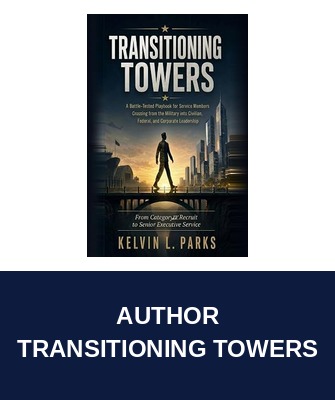
Communication, Collaboration, Culture, Perseverance, and Trust are the subject of a published book. The system on this page is not a diagram assembled for a proposal. It is a body of work, and you can read the whole argument for yourself.
Read Transitioning Towers“I have spent a lifetime giving speeches about service. This is the book I wish I could have handed every leader I was ever privileged to lead.”
Brigadier General Alfred Flowers Jr., USAFfrom the Foreword